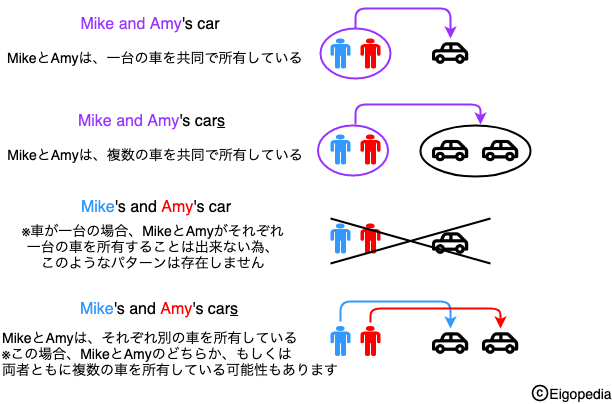
以下のような表現のパターンがあります。
難易度:6/10
関連リンク:「それは誰の(もの)ですか?」と聞きたい場合、「who’s」と「whose」、どちらを使用しますか?
「2^4」は以下の二通りの読み方があります。
①「two(基数)+ to the + fourth(序数)+ power」
②「two(基数)+ to the power of + four(基数)」
また、「二乗」(n^2)や「三乗」(n^3)の場合、以下のように読むこともできます。
2^2(nが2の場合):
two squared
(= two to the second power/two to the power of two)
2^3(nが2の場合):
two cubed
(= two to the third power/two to the power of three)
難易度:6/10
関連リンク:数学記号「<」、「≤」、「>」、「≥」、それぞれ何と読みますか?
一般的に「if you don’t mind (me asking)…」 または「if I may ask…」を使用します。
If you don’t mind (me asking), how much did you pay for that?
If I may ask, how much did you pay for that?
難易度:5/10
関連リンク:「I am sorry」と「I feel sorry」に違いはありますか?
一般的に「I’d rather not say」または「I prefer not to say」といいます。
Aさん:Is there a candidate whom you support in the upcoming election?
Bさん:(I’m sorry but) I’d rather not say.
難易度:6/10
関連リンク:「I am sorry」と「I feel sorry」に違いはありますか?
「Ten plus five is (equal to) fifteen」といいます。
あるいは、「plus」を「added by」に入れ替えることも可能です。
Ten added by five is (equal to) fifteen.
10に5を足したら、15である。
※「足し算」のことを「addition」といいます
難易度:4/10
関連リンク:引き算の式「10 – 7 = 3」はどのように読みますか?
一般的に以下のように表します。
「Aさん(主語/見かけた人)+ saw + Bさん(目的語/〜をしている人)+ 動名詞(Bさんがしていること)」
Adam saw Brenda eating at the cafeteria.
Adamは、Brendaが食堂で食べているのを見かけた。
尚、「Aさんは、Bさんが〜したのを見た(見かけた)」といいたい場合は、一般的に以下のように表します。
「Aさん(主語/見かけた人)+ saw + Bさん(目的語/〜をした人)+ 動詞の原形(Bさんがしたこと)」
Adam saw Brenda eat at the cafeteria.
Adamは、Brendaが食堂で食べていたのを見かけた。
難易度:5/10
関連リンク:「〜をするところだった」といいたい場合、どのようにいえば良いでしょうか?
一般的に「I hope you get well soon」または「I hope you feel better soon」といいます。
Aさん: “I think I’ll go home early today because I’m not feeling too good.”
Bさん: “I hope you get well soon.”
Aさん: “Thanks.”
難易度:5/10
関連リンク:「筋肉痛」といいたい場合、どのようにいえば良いですか?
一般的に「右上」は「upper right」、「右上隅」は「upper right-hand corner」といいます。
以下の図をご参照ください。
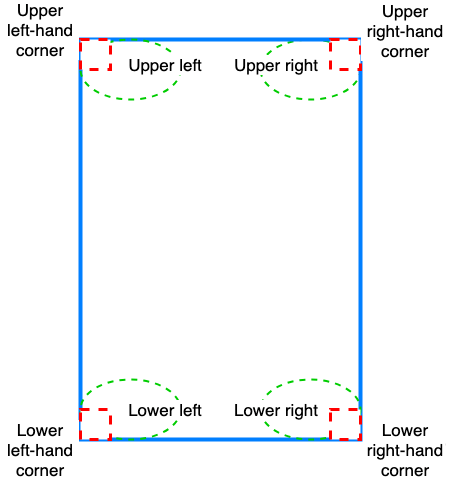
※「-hand」は省略することが可能です(例:upper right corner)
「upper」は「︎top」に、「lower」は「bottom」に入れ替えることもできます(例:top right、bottom right)
難易度:6/10
関連リンク:「右上の奥歯」といいたい場合、どのようにいえば良いでしょうか?
Ten minus seven is (equal to) three.
あるいは、「minus」を「subtracted by(〜で引いたら)」に入れ替えることも可能です。
Ten subtracted by seven is (equal to) three.
10を7で引いたら、3である。
※「引き算」のことを「subtraction」といいます
難易度:4/10
関連リンク:掛け算「6 x 2」はどのように読みますか?
一般的に以下のように表します。
「主語(長引いているもの/こと)+ be動詞の現在形 + running + long」
The sales meeting is running long.
営業会議が長引いている。
尚、どれくらい長引いているかを示したい場合、一般的に以下のように表します。
「主語(長引いているもの/こと)+ be動詞の現在形 + running + long + by + 時間」
The sales meeting is running long by 15 minutes.
営業会議は15分長引いている。
難易度:6/10
関連リンク:「〜をするところだった」といいたい場合、どのようにいえば良いでしょうか?